


QUICK PARENTS GUIDE: This book meets the call for #WeNeedDiverseBooks. The series includes a black girl protagonist, is Afrocentric and includes representation of albinism. While the FMC is strong and powerful the book shares cultural gender disparities between traditional Nigerian patriarchal society and a more egalitarian magical world. The violence in the book could be jarring for some readers, since the villain in the first book is a serial killer and there are descriptions of violence with children and this bad guy. Yikes! I would read ahead to see how this feels for your young person if that seems like a trigger! The teen romance featured in these books is slow paced and tentative, just enough to let you know these characters are real deal but also just one kind of relationship featured in the story.
On a drive back from Grayson Highlands this week my son and I were having a typical kind of talk for us, name your top five favorite book series, favorite characters, favorite stand alone non-series book? Akata Witch (2011) and her sequels by Nnedi Okorafor easily made my list of favorite book series, all inclusive, not only in the juvenile fiction category. So as I thought about my first book talk, I knew I had to start right here.
I heard about AW (Akata Witch) when my friend, Susan, suggested it to me a few years ago. At the time my daughter and I were just getting into our contemporary Magic School sub-genre jag, which eventually included Nik Blake and the Remarkables (Thomas, 2023), The Marvelers (Clayton, 2022), Vanya and the Wild Hunt (Mandanna, 2025), Scholomance (Novik, 2020-2022), Onyeka (Okogwu, 2022) and The Greenwild (Thomson, 2023). Susan said that AW is known as the Nigerian Harry Potter. Well! I was ready for it right then and there.
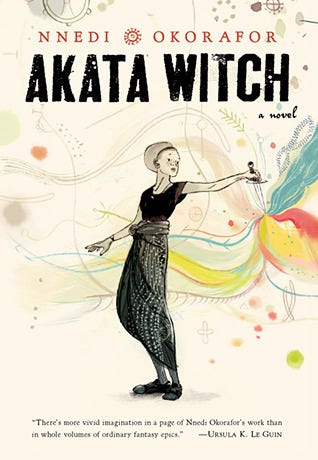
AW is the first book in the Nsbidi Scripts trilogy, followed by Akata Warrior (2017) and Akata Woman (2022). The protagonist, Sunny, was born in New York City, but now lives in Nigeria, where her parents are from. Her coming of age arc includes, learning about the magical world and her role in it, deepening friendships, and solving mysteries. Sound familiar!? Yes, but get ready for African culture and history, seriously passing the Bechdel Test and a new vision of the Magic School/magican right of passage story.
In our house we are reluctant, if die-hard Harry Potter fans. The stories, the characters and the connection shared around these books is hard to replace. But damn if we don’t try around here, because she who must not be named, is way out of the realm of people we admire.
Let me tell you the Akata Witch books do that work and much more. While the newer Magic School books seem to tread in the footsteps, usually making wonderful additions to the big storied world but not often marching far off the beaten path, AW, well, it’s something different. Okorafor is riding an extra large magical grass cutter through a parallel path occasionally shining a light over to Harry Potter’s trail, nodding the head or maybe making a slightly rude gesture (or maybe that last part is just me). AW is more raw, hardcore (I mean serial killers, yikes!) and gritty than most of than Harry Potter and other Magic School books we have read. Maybe part of that is that this leans way more towards YA than Children’s Lit. But also Okorafor just seems to not be trying so hard to get into Hogwarts. She does enough to be recognizable in the genre, but underneath she is telling compelling stories of contemporary issues using culturally relevant mythology. She manages to both create a fantastical magic world that you really want to get to know and uses that magic to address the real world issues of her characters, for instance Sunny’s struggle with her identity and oppression as an American born Nigerian, albino girl, her relationship with patriarchy as represented by her father and eventually contemporary issues such as confraternity hazing in Nigeria. None of those issues are forced. It’s neatly done; I was left feeling both more knowledgeable and more curious while just being utterly fascinated with the magic and characters.
The idea of Magic School itself is also actually turned inside out in this story. School is broadened to community. In book one it’s primarily the magical city, Leopard Knocks, which includes mentors and trials and a more messy structure to all the learning that Vygotsky would totally cherish. It appeals more to my self directed education heart than to my nostalgia for the schoolhouse. It’s far from all butterflies and rainbows but the trials feel more part of the world than separated into school and out of school time.
The first time I read the AW series I kept thinking about Chimamanda Amidichi’s Ted Talk The Danger of a Single Story and feeling my whole being light up with gratitude for Okorafor’s talented voice bringing rich Nigerian storytelling and fire fantasy fiction to the world. Nic Blake (Nik Blake and The Remarkables, Thomas), for sure sure, Elle (The Marvellers, Clayton), Vanya (Vanya and the Wild Hunt, Mandanna), Onyeka (Onyeka and the Academy of the Sun, Okagwu) and Amari (Amari and the Night Brothers, Alston) certainly do this work and thank you, thank you, thank you for it dear authors. Akata Witch, though, is my personal standout in not only changing the scene early on (2011!) and showing us what an Afrocentric magical rite of passage might look like, but also for being a stellar read.
What did you love about Akata Witch, reader?
Stay tuned for more! Coming soon is a Top Ten Magic School Books post with micro reviews of those noted above and more!