


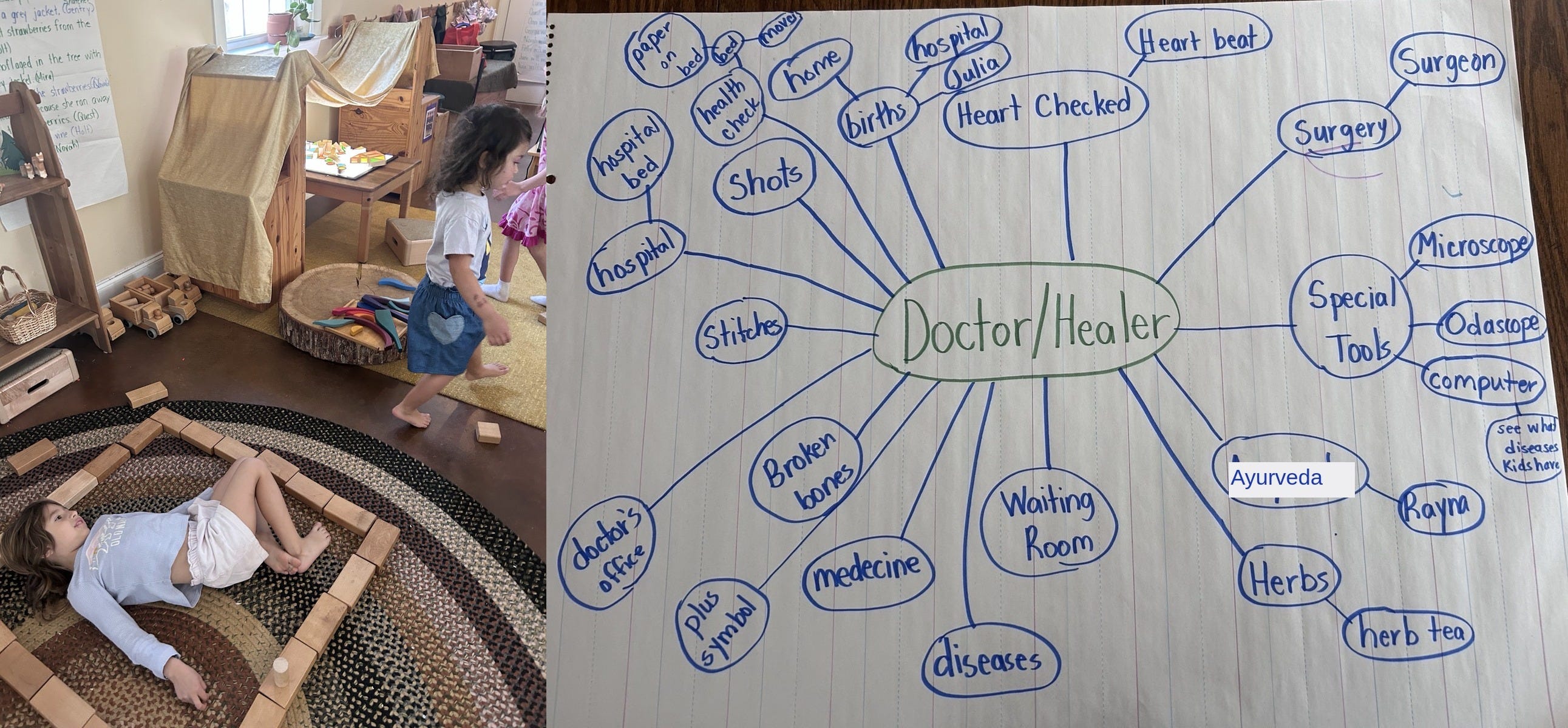
In late March three children created x-ray machines with blocks over the course of a few days. I observed their play and listened to the language they used: doctor, x-ray, healer, bones. On the third day I brought a piece of chart paper to the big table in our playroom. I wrote Doctor/Healer in the middle and circled it. By this time at least a couple children had already noticed me and were curious. They were already familiar with the idea of making charts about things going on in our space. I told them I had noticed their doctor play and wanted to write down all the things they know. It was fast paced from there! I wrote, more kids joined, some left. Over about 20 minutes we made this chart of what they know. I posted it low on the wall and over the next weeks we would return to reading it and adding more. And add boo boo tape to fix my spelling of Ayurveda!
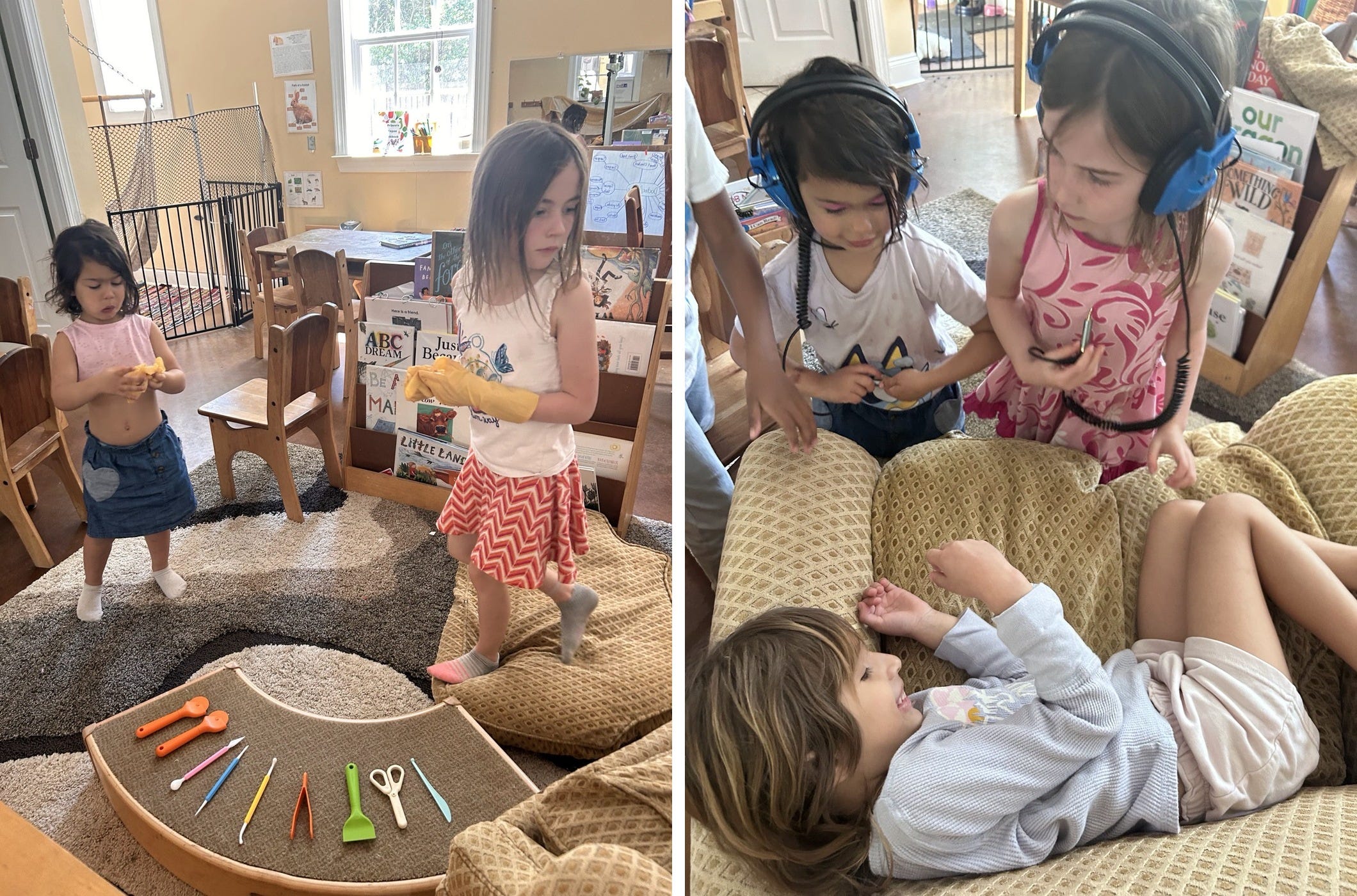
The next day I asked if they would like help to create a doctor’s office. By this time they already had chosen a location in the playroom and began using the headphones from the listening center and craft materials to help make tools. We made a list of what they might want. On a cleared off shelf we added clipboards, plastic clay tools which they thought made great doctor tools and pieces of stretchy fabric that made great bandages.
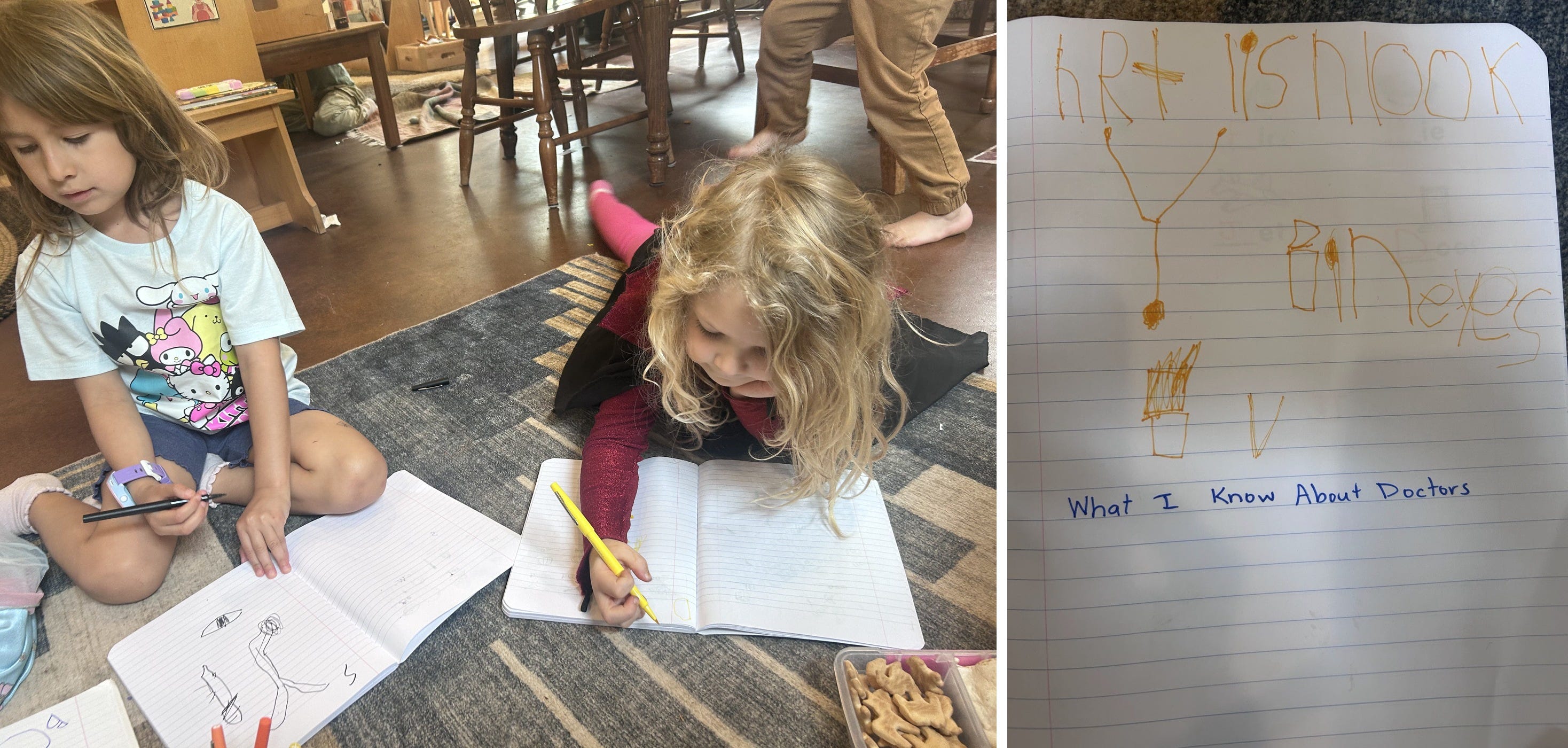
Play continued. In a few days I invited everyone to join me for some daybook writing and drawing. I asked everyone to make a page about doctor’s offices. Many wanted to spend time on this writing and drawing. At end of day circle they took turns sharing. I brought some library books about doctors, which stimulated more conversations.
After this a lot of magical connections happened for us both spontaneous and planned. A parent heard about our project and offered to bring several stethoscopes in for us to use. One day in our small group discussion we got on the topic of what is a pulse oximeter. A slightly older child, who had not been part of the project, was nearby overheard this and said, “I have one in my bookbag right here!” He then proceeded to give us a mini lesson right then about his emergency anaphalactic kit. He let us see the practice EpiPen and was very clear that he would not take out or let anyone touch his actual EpiPen. Another day when the children talked about how doctor office’s have a scale, I remembered that there was a big doctor office style one in the schoolhouse (the older kid’s building). The children came up with a plan of which facilitator in the schoolhouse they knew and would like to ask if we could borrow it. They practiced how to make the request. I checked the time and at the opportune moment (when I knew the older group wouldn’t be in a meeting or a class). We walked next door. The children found Jenique, made their request and we together carried the scale back to the playroom!
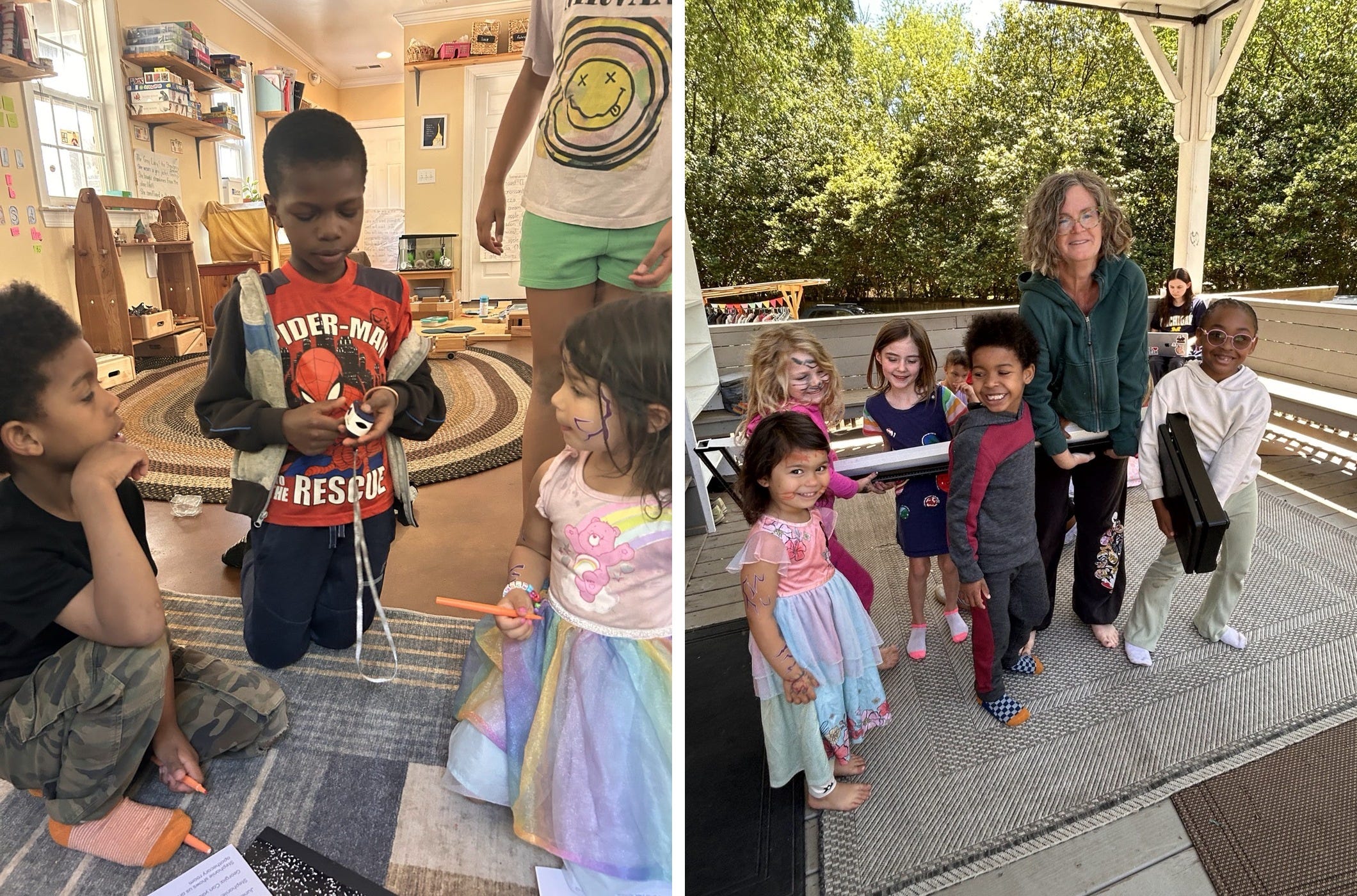
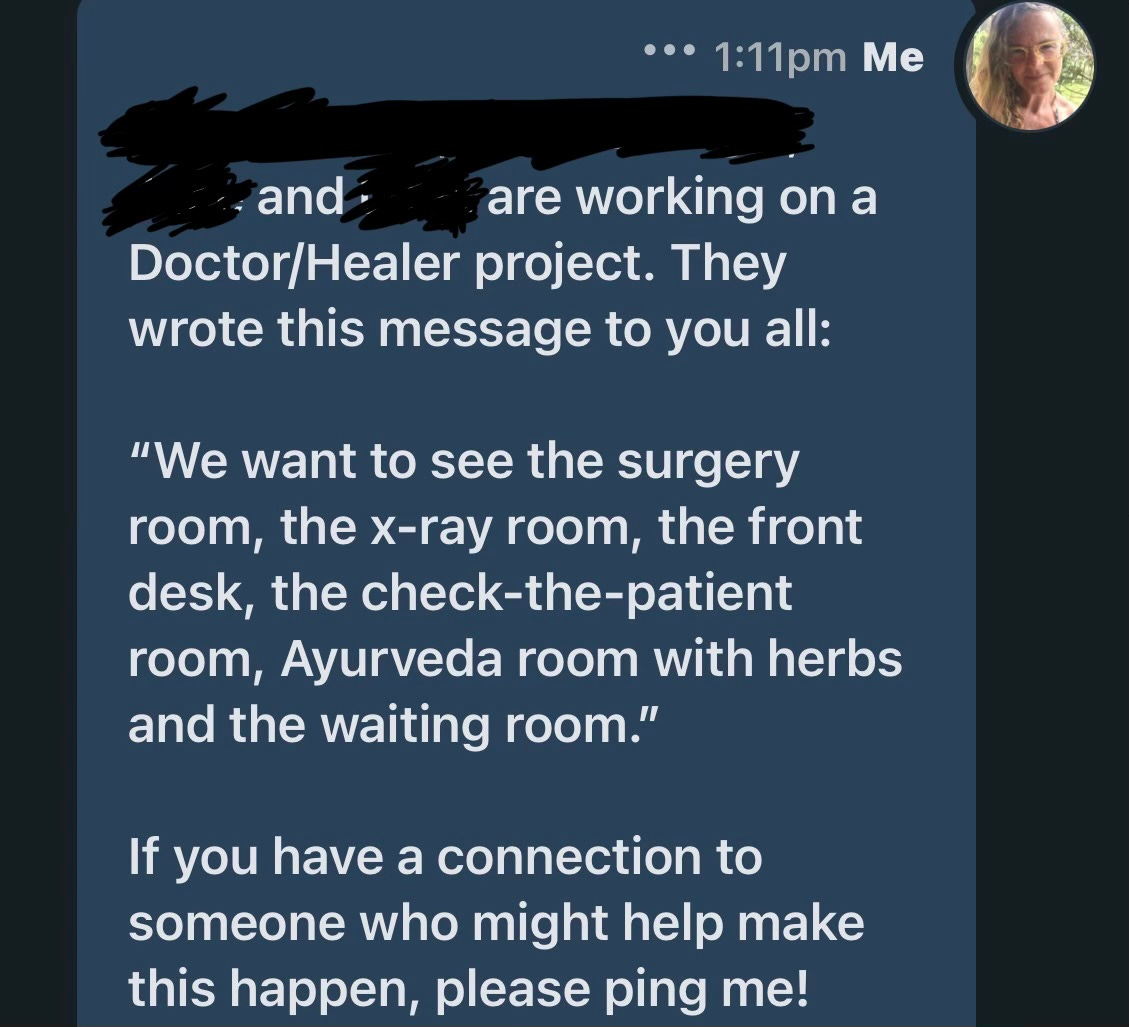
After this we decided to intentionally reach out to our community. The children with my help wrote a message on our community online space asking if anyone knew any doctors or healers that might connect with us for a field trip.
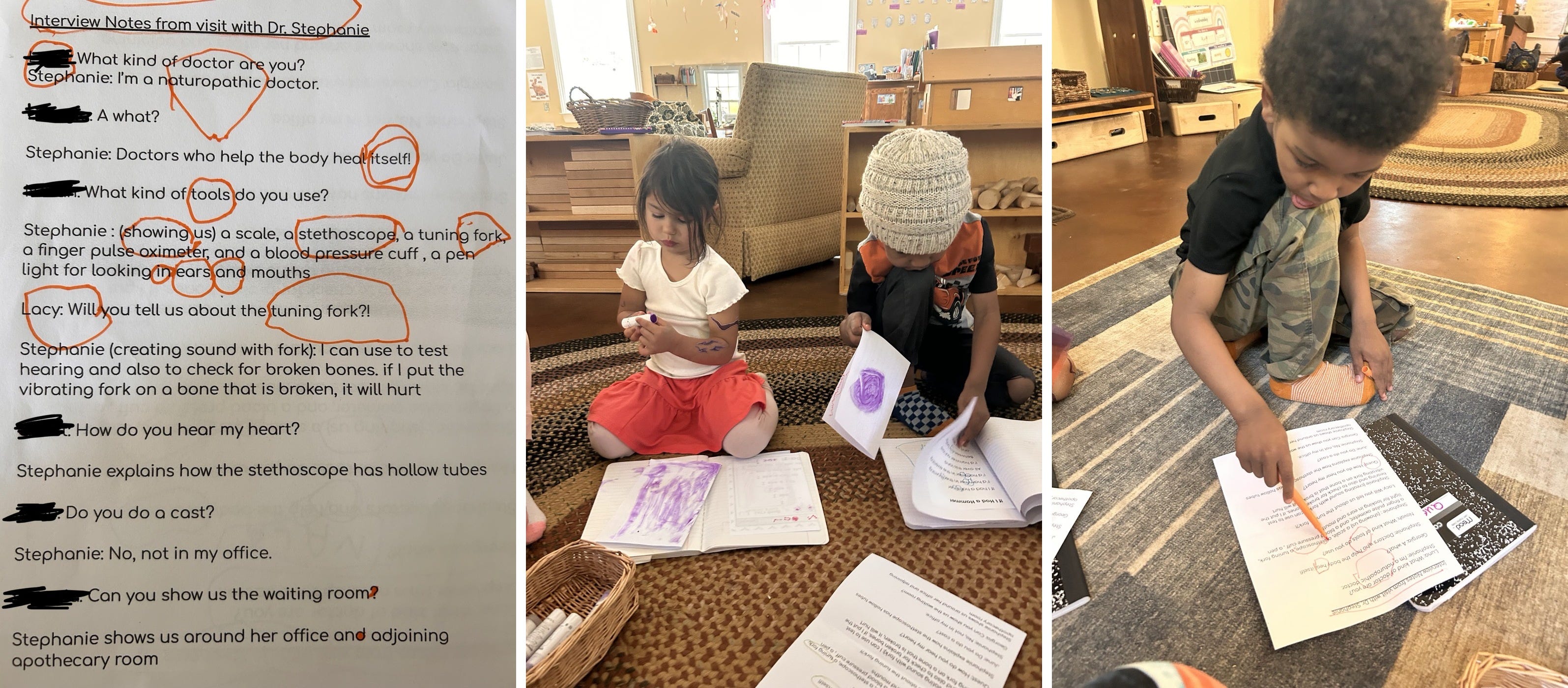
Through one of these I was able to set up a virtual meeting with a naturopath doctor for the following week. The kids gathered with my iPad and interviewed Dr. Stephanie. They got a tour of her space, asked many questions and were incredibly enthusiastic. I took notes on the interview. Afterwards I read the notes back and the kids gave me corrections for things I missed or had gotten wrong. The next week I printed out the notes and we read these together. The children loved looking for their names, some of them could read the entire document, most found words they were interested in like stethoscope and Stephanie. They used highlighters to mark the words that were interesting. We talked about the letters and sounds in these words in organic ways over several interactions with the text. They glued these copies in their daybooks so they could refer back to it.
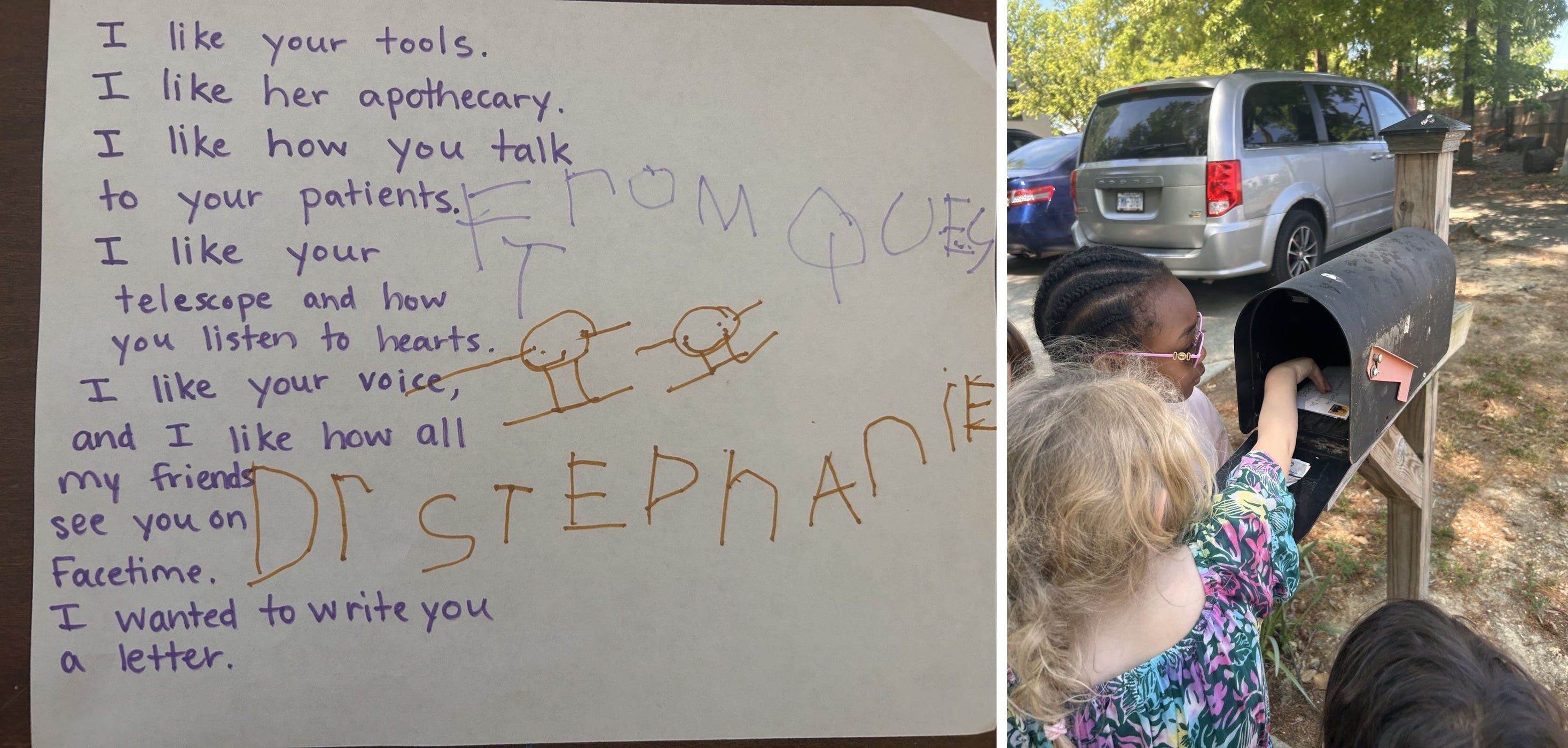
The following week the group decided to set up a waiting room and apothecary like Dr. Stephanie, I also invited them to write thank you notes to her, which they were very excited to put together in an envelope and mail, which included a little field trip up to the coworking space to borrow a stamp and out front to our school’s mailbox.
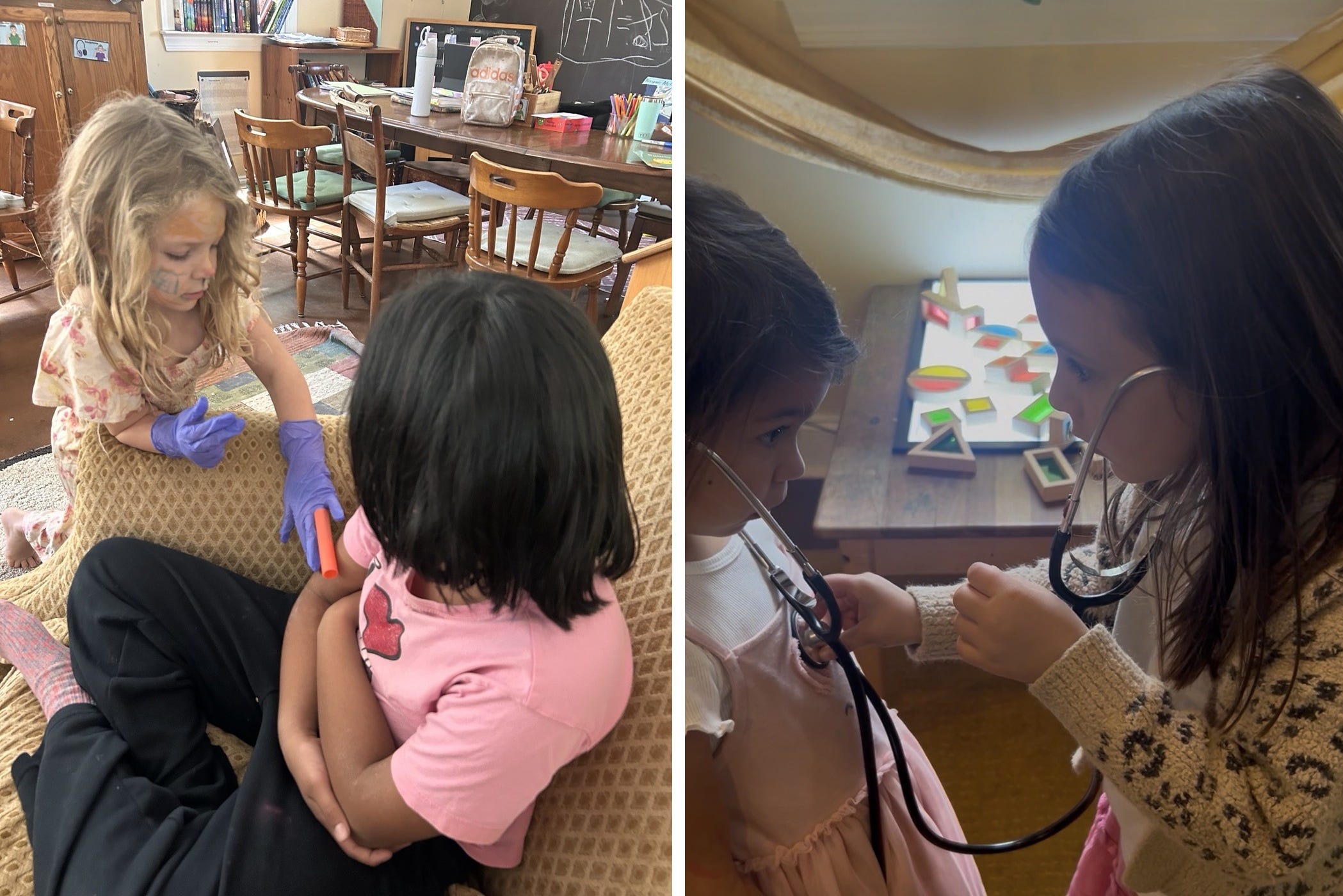
Another day a child’s mom stopped by in the morning to say that her kiddo had asked her if she could come talk to the kids about her work as a midwife. We agreed for her to come back that afternoon when the children gather in the playroom. She did come and before she could take much out of her bag, children were curiously gathering around. Over an hour she showed them many of the tools of her work. She also brought doll babies they could try the tools out with. They learned about measuring and weighing babies, using blood pressure cuffs, more stethoscopes, and even a fetal Doppler used for baby’s heartbeat, but they used to hear their own. She showed them diagrams and charts for taking newborn vitals. They loved all the gloves she gave them to try out. She let them play gently with all of these tools, answered their questions and gave many small mini lessons to individuals and pairs about how tools work.
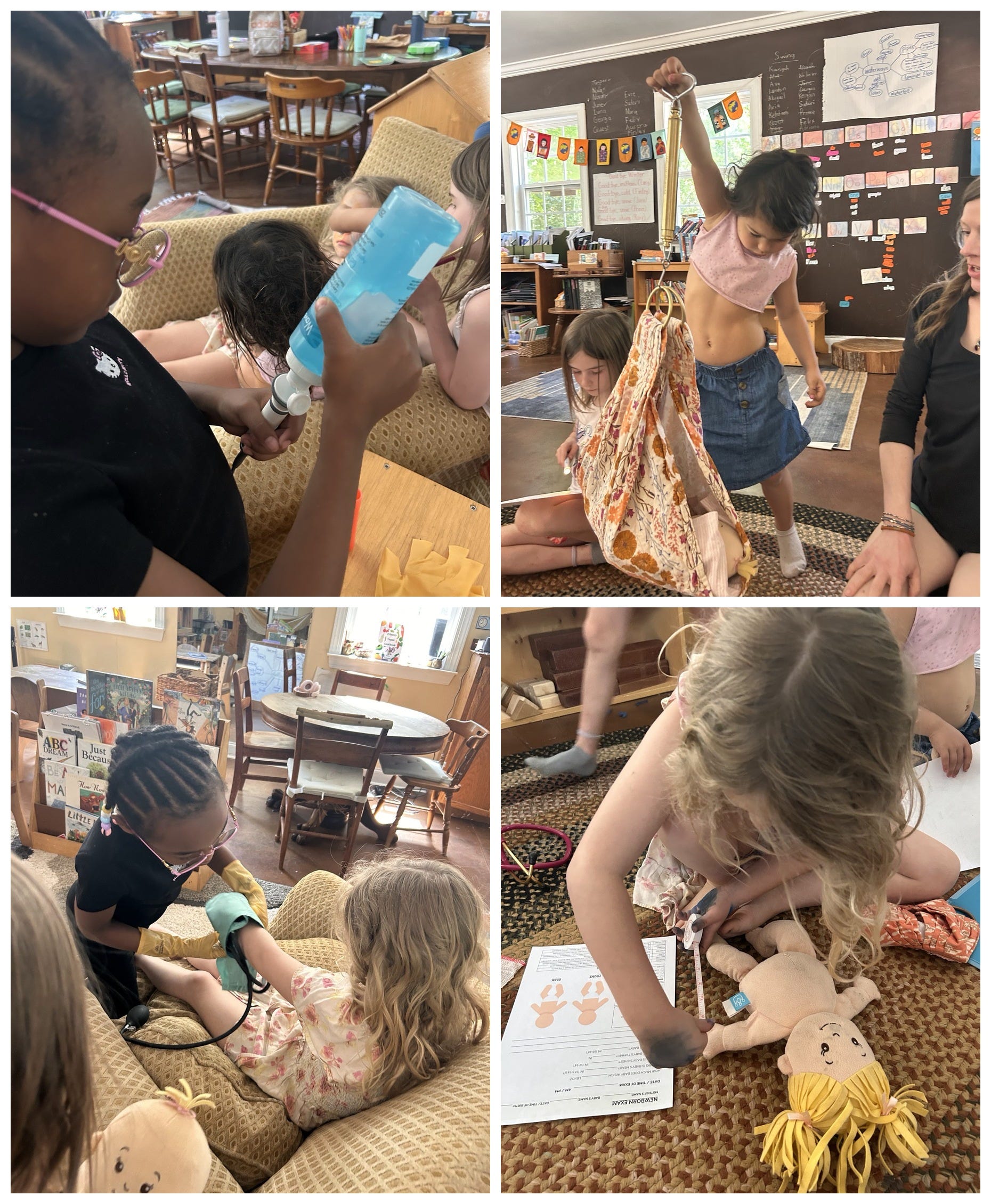
In the days that followed the children included language and their own created tools to match ones they had observed in all these experiences or sometimes the actual tools. I made copies of some of the blank midwife intake sheets, and we added these to the playarea. We spent time back in our daybooks writing and drawing about our experiences.
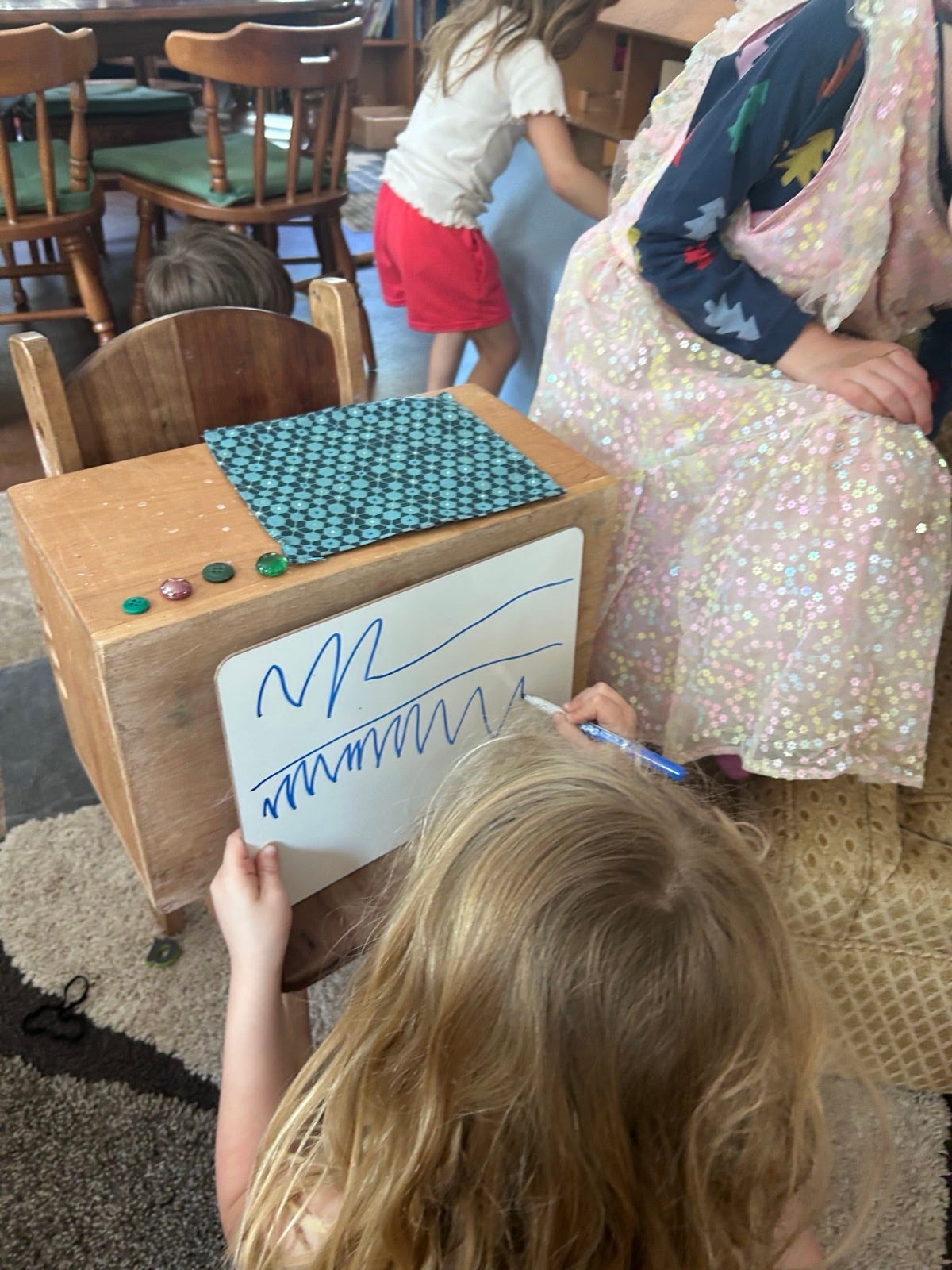
There was a core group of 4 to 6 year olds most deeply and regularly involved in this project. Especially towards the end of the project older children and other 5 and 6 year olds as well as visitors became new additions. The core group showed them the tools, explained how the office worked and included them in the play. Sometimes parents dropped by and were included as well. The new folk extended the play, but moreso it was opportunity for the Doctor/Healer Project kids to mentor new people into the play.
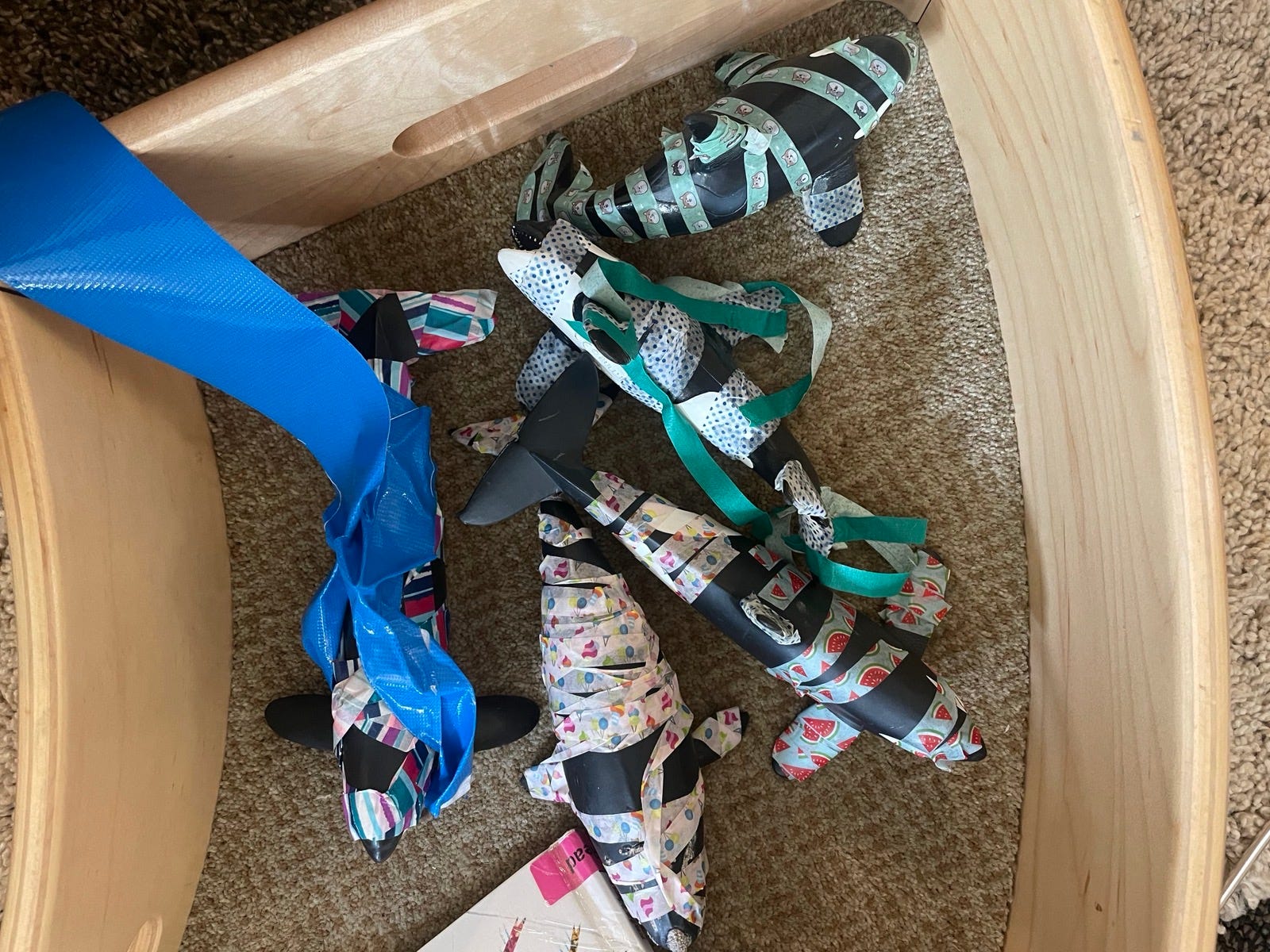
By early May I was noticing a natural lull and shift. One day when I was out for the day and came back to see this box of toy orcas all wrapped up in tape. The kind substitute told me that the children were wrapping the whales in bandages in their veterinary office. The play was shifting, and I felt it in me too, a readiness to wrap up and close out the project. Sometimes we have more formal closures and celebrations. This time with many end of year activities approaching it was more organic. As the children shared their experience with older kids and invited them into their play towards the end of the project, they found their own authentic culmination moments.
Through the project children wrote independently, co-authored, saw their ideas written on charts, played with and discussed letter names and phonics through organic interactions with texts that were part of the project, learned new vocabulary, played with and formally used oral language. They saw that reading and writing are part of their world as we wrote letters to mail, explored through play ways that reading and writing are part of doctors and healer’s lives, read books, wrote messages in our community, and reflected on our learning in our daybooks. Every day there was play and smaller or bigger moments of direct teaching that evolved from the play.
These moments usually included interacting with texts in real ways. The group of near same age children had a wide range of skill and knowledge about alphabetic principles, phonics and reading. In one sitting we might talk about letter names, italics, a suffix, vocabulary, and letter sounds. All five year olds do not need the same things. They do all need a literacy rich environment, discussion: to talk about words, including letters in the context of their lives, to see that their writing does work in the world, both play and real, to experience community that values reading and writing and values their contributions as young readers and writers. I never forced this group to gather to work on the project. They were excited to be part of both the play and the small group meetings. They self selected into the project. The literacy experiences were meaningful and connected to their lives. The work, the learning, was theirs.
MAGIC!!!!